

Process
How the system works
A desalination plant is a reverse osmosis plant. It turns seawater into fresh water in a few clean stages, each one protecting the next.
Intake
Seawater is drawn in and screened.
Pre-treatment
Filters strip out sediment and organics, so the membranes stay clean and maintenance stays low.
High-pressure RO
Pumps force the water through semi-permeable membranes. Fresh water passes through; the salt does not.
Two streams out
Permeate, the fresh water you keep, and concentrate, the brine returned to a permitted outfall.
Post-treatment
The fresh water is remineralized, balanced, and disinfected to potable standards, then stored and distributed.
Energy recovery
Pressure is captured off the brine stream and reused, where a well-designed reverse osmosis desalination plant earns back much of its running cost.
None of this is visible to a guest. Built right, the plant just means the tap always runs.
Scope
What we build
We approach desalination plant construction as a build, not a box dropped on a slab. As a desalination company that builds rather than installs, we deliver:
- Seawater RO for open-ocean sites
- Brackish water RO where the source is a well or lagoon
- Containerized and modular systems where speed and footprint matter
- Fixed, building-based plants sized for a full resort or other commercial water treatment needs
Every build covers the full chain: intake, pre-treatment, RO trains, post-treatment, storage, distribution, and brine discharge.
We build in redundancy, so one train can come down for service without the property losing water. And whether the scope is a single reverse osmosis plant or full water treatment plant construction alongside the resort, it is one accountable build.
Timing
Designed in, not bolted on
Most water problems on island projects are not equipment problems. They are timing problems.
And it never stands alone:
Water, power, and waste, built as one system. That is what lets a property run where the grid and the water main do not reach.
Why Stabilis
Why owners choose Stabilis
Cost you can plan around.
The real number comes out of pre-construction, priced against your site and water demand, not a guess.
Water that does not stop.
Redundant trains and on-site power keep routine service and grid outages from becoming shortages.
Resilience through the storm season.
A property that makes its own water stays open when its neighbors close.
Permitting handled in the work.
Intake, discharge, and potable-water compliance are planned into the design, not left for you to chase.
Sustainability that lowers the bill.
Energy recovery, wastewater reuse, and solar offset cut both the footprint and the operating cost.
One builder accountable for all of it.
We design the plant in and self-perform the build, so there is no gap between who promised the water and who delivers it.
Coverage
Where this matters
This is core work where we build: the U.S. Virgin Islands, Puerto Rico, the Bahamas, and the island and coastal markets of Florida and Texas.
These are sites where municipal water is limited, costly, or simply not there. We have built reverse osmosis desalination plants for resort projects in the Caribbean, and it is exactly the remote, logistically hard work we are built for.
See all locations→The wider system
Part of a complete system
A desalination plant is one of four systems that let a remote property run on its own, and it works best planned alongside the others.
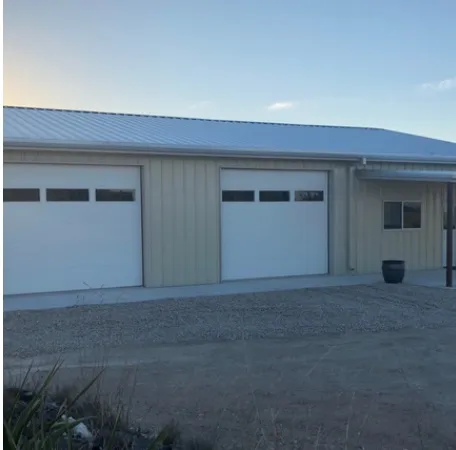
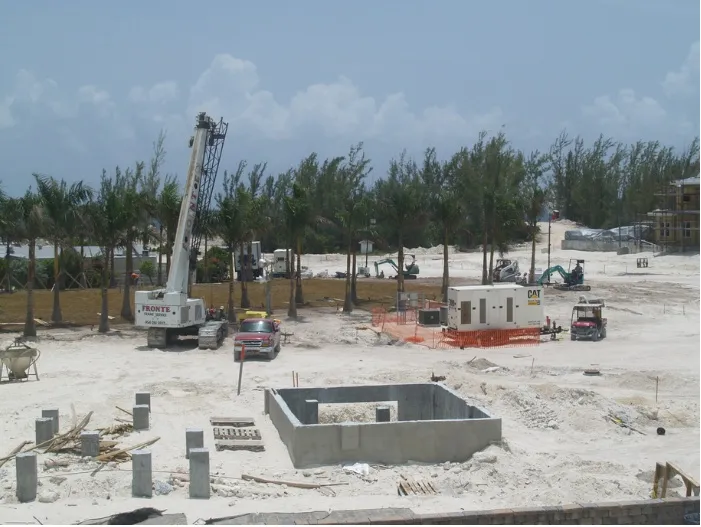

See how the four fit together on the Resort Infrastructure overview, and how any of them gets built on How We Deliver.
FAQ
Frequently asked questions
How does desalination work?
It removes salt from seawater to make fresh, potable water. Almost every modern plant uses reverse osmosis: water is pushed through semi-permeable membranes at high pressure, the fresh water passes through, and the salt is returned to sea through a permitted outfall.
What is a desalination plant?
The complete facility that turns seawater into usable water: intake, pre-treatment, reverse osmosis membranes, post-treatment, storage, distribution, and brine discharge. For a resort, it is what makes the property independent of the municipal supply.
How does reverse osmosis work?
In nature, water moves across a membrane toward the saltier side. Reverse osmosis applies pressure to reverse that flow, pushing water through the membrane and leaving the salt behind. Fresh water on one side, concentrated brine on the other.
How much does a desalination plant cost?
It depends on daily water demand, whether the source is seawater or brackish, site conditions, intake and discharge, energy cost, and redundancy. There is no single price. The reliable figure comes from early pre-construction, built against your actual site and program.
Desalination vs reverse osmosis: what is the difference?
Desalination is the goal, removing salt to make fresh water. Reverse osmosis is the method, and the standard for modern plants. Thermal methods exist, but reverse osmosis desalination is more energy-efficient for most island and resort projects, which is why it is what we build.
Talk to our team
Ready to plan the water plant into your project? Contact the team to talk through your site and water demand, or send the details through our Request for Quote form.
Request a Quote (RFQ)We build where others can't.